Mr. Jeme Tien Yow (1861-1919) is renowned as the "father of modern Chinese engineering" and hosted the construction of China's first independently designed and constructed single track cross-mountain railway tunnel - the Badaling Tunnel. He is the pioneer and the forerunner in the field of tunnel and underground space in China. In honor of Mr. Jeme Tien Yow’s remarkable contributions, the journal of Underground Space started the “Jeme Tien Yow Lecture” from 2024, inviting distinguished experts from all of the world to deliver one keynote speech each year on important achievements in the realm of underground space. The speakers of the “Jeme Tien Yow Lecture” must be eminent researchers or engineers recognized for their exceptional contributions to the field of underground space and their substantial global influence.
The aim of the “Jeme Tien Yow Lecture” is to establish a prestigious invited lecture with worldwide-reputation and establish a world-renowned platform through which not only Chinese researchers and engineers can quickly and directly understand the latest developments in the world, but also make it possible for the worldwide academic community to have a wider and deeper understanding of the latest developments in China.
Each lecture will be published as the State of the Art Report in the journal of Underground Space. Before the “Jeme Tien Yow Lecture” is given, a youth forum will also be held to encourage the keen and profound researches from young scientists and engineers. The topics of the youth forum are in the same area as the lecture.
The lecture is held permanently at A101, Building of College of Civil Engineering, Tongji University, on Saturday of last week in May every year.
https://www.sciencedirect.com/journal/underground-space
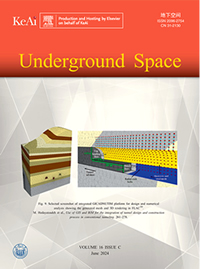
Underground Space is an international academic journal dedicated to advancing knowledge and innovations in the field of underground engineering. Since its establishment, Underground Space has been a leading platform for researchers and practitioners to share their insights, findings, and best practices in the utilization and management of underground spaces.
Underground Space features peer-reviewed articles that cover a wide range of topics, including planning, design, construction, safety, risk control, energy efficiency, and smart technologies related to underground spaces. The journal welcomes contributions from various disciplines, fostering interdisciplinary collaborations and promoting the integration of knowledge and technologies in underground engineering.
The editorial team of Underground Space is composed of renowned experts and scholars from around the world, ensuring the high quality and relevance of the published content. The journal adheres to strict ethical and publishing standards, ensuring the integrity and authenticity of the research reported.
Underground Space has gained widespread recognition and impact in the academic and engineering communities. It has been indexed and included in various prestigious databases, including SCIE, EI Compendex, and Scopus, reflecting its international standing and influence. The current impact factor of the journal is 6.4 (Journal Rank: JCR - Q1).
With the increasing demand for underground spaces and the challenges posed by urbanization, Underground Space provides a timely and essential platform for researchers and practitioners to stay updated with the latest developments, trends, and innovations in the field. It serves as a bridge between academia and industry, fostering collaborations and partnerships that lead to practical solutions and sustainable development in underground engineering.
Bin Ye, Ph.D
Professor
Department of Geotechnical Engineering, College of Civil Engineering,
Tongji University, Shanghai, China
Tel: +86-13501691437
Email: yebin@tongji.edu.cn
Fei-Fan Ren,Ph.D
Associate Professor
Department of Geotechnical Engineering, College of Civil Engineering,
Tongji University, Shanghai, China
Tel: +86-13816589810
Email: feifan_ren@tongji.edu.cn
Days
Hours
Minutes
Seconds
Registration
Before May 20, 2027
Lecture Date
13:30-18:00, May 29, 2027